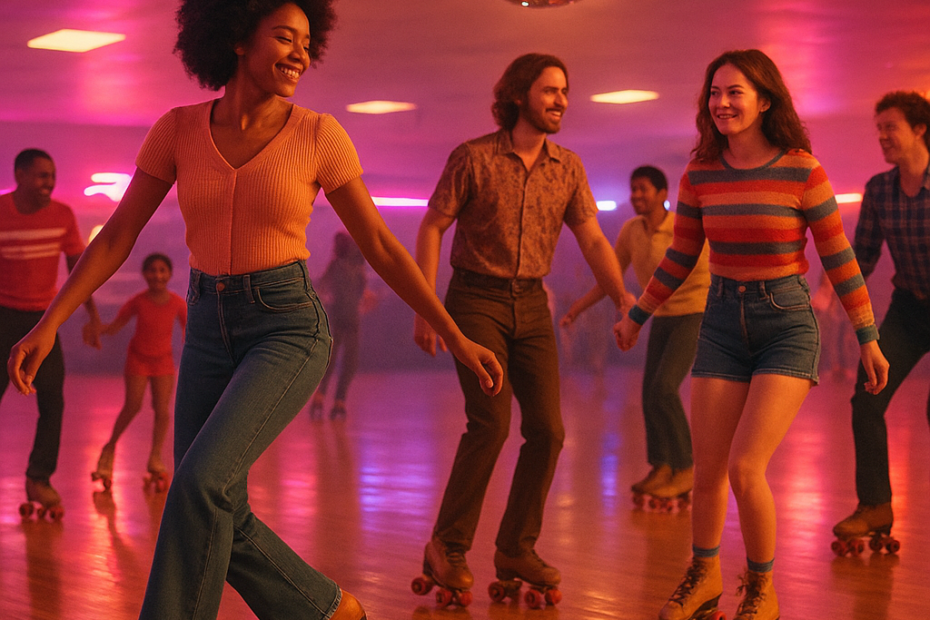
Strap on a pair of quad skates, hit the hardwood floor, and suddenly you’re part of something much bigger than just rolling around in circles. Roller skating in America isn’t simply a recreational activity — it’s a living, breathing subculture with deep roots in Black communities, feminist movements, LGBTQ spaces, and the rhythms of soul, funk, and hip-hop. From the grand rinks of the early 20th century to the outdoor skate jams happening right now in city parks, roller skating carries an entire history in every groove of its wheels.
This is the story of how roller skating became one of the most culturally rich and resilient subcultures America has ever produced.
Where It All Began: The Origins of Roller Skating
Roller skating didn’t start in America — but America certainly made it its own. The first documented use of roller skates traces back to 1743, when they appeared on a London stage during a theatrical performance. The invention of a practical four-wheeled “quad” skate is generally credited to James Leonard Plimpton, a New York businessman who patented his design in 1863. Plimpton’s skates could actually turn, which was revolutionary, and he opened one of the first roller skating rinks in Newport, Rhode Island shortly afterward.
By the late 19th and early 20th centuries, roller rinks were popping up across the United States, drawing massive crowds. Skating became a fashionable pastime among white middle-class Americans, while rink owners — reflecting the era’s brutal segregation — routinely barred Black patrons from entering.
Segregation on Wheels
The civil rights dimensions of roller skating history are impossible to ignore. Throughout the Jim Crow era, roller rinks were sites of explicit racial exclusion. Many rinks designated specific “colored nights,” limiting Black skaters to one evening per week, often Monday — sometimes derisively called “Dark Monday” by rink owners. Others simply refused entry altogether.
Rather than accepting exclusion, Black communities built their own skating spaces. Black-owned rinks became cultural hubs — places where music, style, and community converged far from the watchful eye of white gatekeepers. This act of creating independent space would set the foundation for a distinctly Black skating culture that continues to thrive today.
Why Is Roller Skating So Big in Black Culture?
This is one of the most-asked questions about roller skating history, and the answer is layered and powerful. Black Americans didn’t just adopt roller skating — they transformed it into an art form.
During the 1970s and 1980s, as soul, funk, and R&B music pulsed through urban America, roller rinks became the social epicenter of Black urban life. Cities like Chicago, Atlanta, Detroit, Los Angeles, and Washington D.C. developed their own distinct skating styles, each deeply tied to the local music scene. Chicago gave rise to the “JB” style, a smooth, rhythmic technique rooted in James Brown’s music. Detroit skaters developed their own fluid, precise movements. Atlanta’s scene was influenced by the bounce and energy of Southern hip-hop.
Skating wasn’t just about moving on wheels — it was about self-expression, community belonging, and cultural pride. The rink was a rare space where Black people could gather freely, dress up, compete in style, and celebrate their own cultural identity without compromise.
Historians and cultural critics have noted that roller skating rinks functioned similarly to other Black third spaces — neither home nor work, but vital social arenas. As scholar Daina Ramey Berry and others in the African American Intellectual History Society have documented, rinks like the Interskate 91 in New Jersey or the storied Rinks of Chicago held enormous significance for generations of Black Americans.
The Music Connection
You simply cannot separate Black skating culture from its soundtrack. The DJ at a Black roller rink wasn’t just playing background music — they were the heartbeat of the entire experience. A skilled rink DJ could read the crowd, build energy, and drop exactly the right track to make the floor erupt.
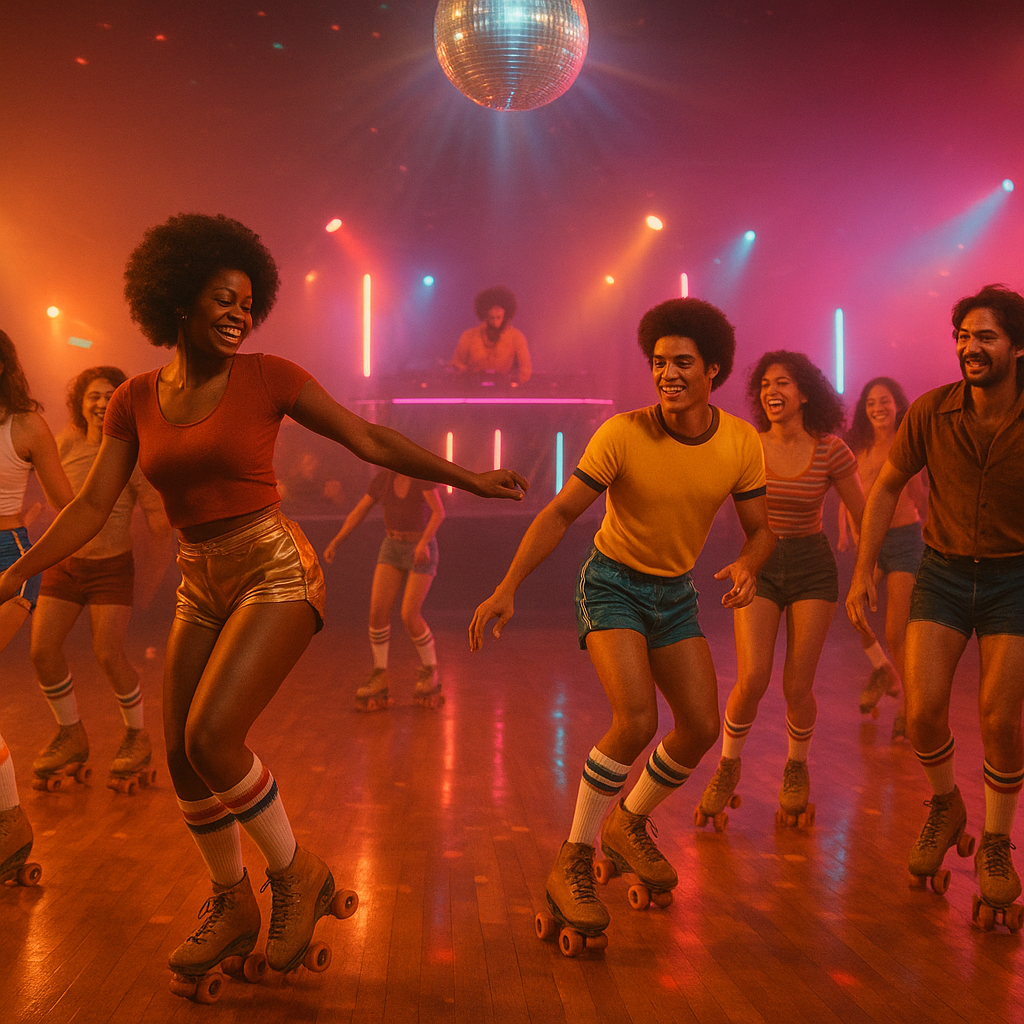
Artists like Earth, Wind & Fire, Parliament-Funkadelic, Cameo, and later Janet Jackson, New Edition, and a range of hip-hop acts all became synonymous with the rink experience. This is precisely the kind of intersection of soul, funk, and cultural history that makes roller skating so meaningful — it’s practically a living monument to Black American music. Understanding how funk music evolved helps illuminate just how deeply these sounds shaped the rink experience from the ground up.
The Rise, Fall, and Revival of Roller Skating Popularity
Roller skating reached its commercial peak in the late 1970s and early 1980s. The disco era was a golden age — rinks were packed, skate culture was glamorous, and mainstream America had temporarily embraced wheels. At the height of the boom, there were an estimated 4,000 roller rinks operating across the United States.
Why Isn’t Roller Skating as Popular as It Once Was?
The decline came from several directions at once. When disco died, it took some of the mainstream enthusiasm for rink culture with it. The rise of home video game consoles, cable television, and later the internet gave young Americans countless new entertainment options. Many rinks — operating on thin margins — simply couldn’t compete. Economic downturns, rising real estate costs, and the closure of anchor shopping malls (which often housed rinks) accelerated the decline. By the early 2000s, the number of operating rinks in America had dropped dramatically, with estimates suggesting fewer than 1,500 remained.
And yet, in Black communities, the rink culture never truly died. It went underground, became more intimate, and survived through sheer devotion. The people who loved it kept showing up.
The COVID-19 Revival
Something unexpected happened during the COVID-19 pandemic: roller skating exploded in popularity again. Stuck at home and craving outdoor activity, millions of Americans rediscovered quad skates. Social media — particularly TikTok — played a major role, with videos of skaters dancing in parks, parking lots, and streets going massively viral. Roller skate manufacturers reported selling out of inventory. Waitlists stretched for months.
For many new skaters, this wasn’t just a pandemic hobby — it became a genuine entry point into the rich cultural history that longtime skaters had been preserving for decades.
Women, Feminism, and the Rink
Roller skating has always had a complicated and fascinating relationship with gender. In the 19th century, rinks were actually considered controversial precisely because they gave women a degree of physical freedom and mixed-gender socialization that was otherwise restricted. Feminist historians have pointed to early rink culture as one of the few Victorian-era spaces where women could move their bodies athletically in public.
In the 20th century, Black women in particular became central figures in rink culture — not as passive participants, but as style innovators, competitive skaters, and community builders. The athleticism, fashion creativity, and social authority that Black women brought to the rink was remarkable and consistently underrepresented in mainstream narratives about skating history.
Roller derby — a contact sport with roots going back to the 1930s — provided yet another dimension of women’s participation in skating culture. Originally a novelty endurance event, roller derby evolved into a full-contact sport and experienced a massive grassroots revival in the early 2000s, largely driven by women who wanted a fierce, self-organized athletic outlet.
Is Roller Derby LGBTQ? Queerness and Skating Spaces
Modern roller derby has become one of the most openly LGBTQ-welcoming spaces in all of American sport. The DIY, punk-influenced revival of roller derby that took root in cities like Austin, Texas in the early 2000s explicitly embraced queerness, gender nonconformity, and radical inclusivity as part of its identity.
Many roller derby leagues across the country have gender-inclusive policies, welcoming transgender and non-binary athletes. The Women’s Flat Track Derby Association (WFTDA), the sport’s largest governing body, has formal policies affirming the participation of transgender women. The culture surrounding the sport — with its emphasis on chosen names, team personas, and community building outside mainstream institutions — has made it a natural home for LGBTQ athletes.
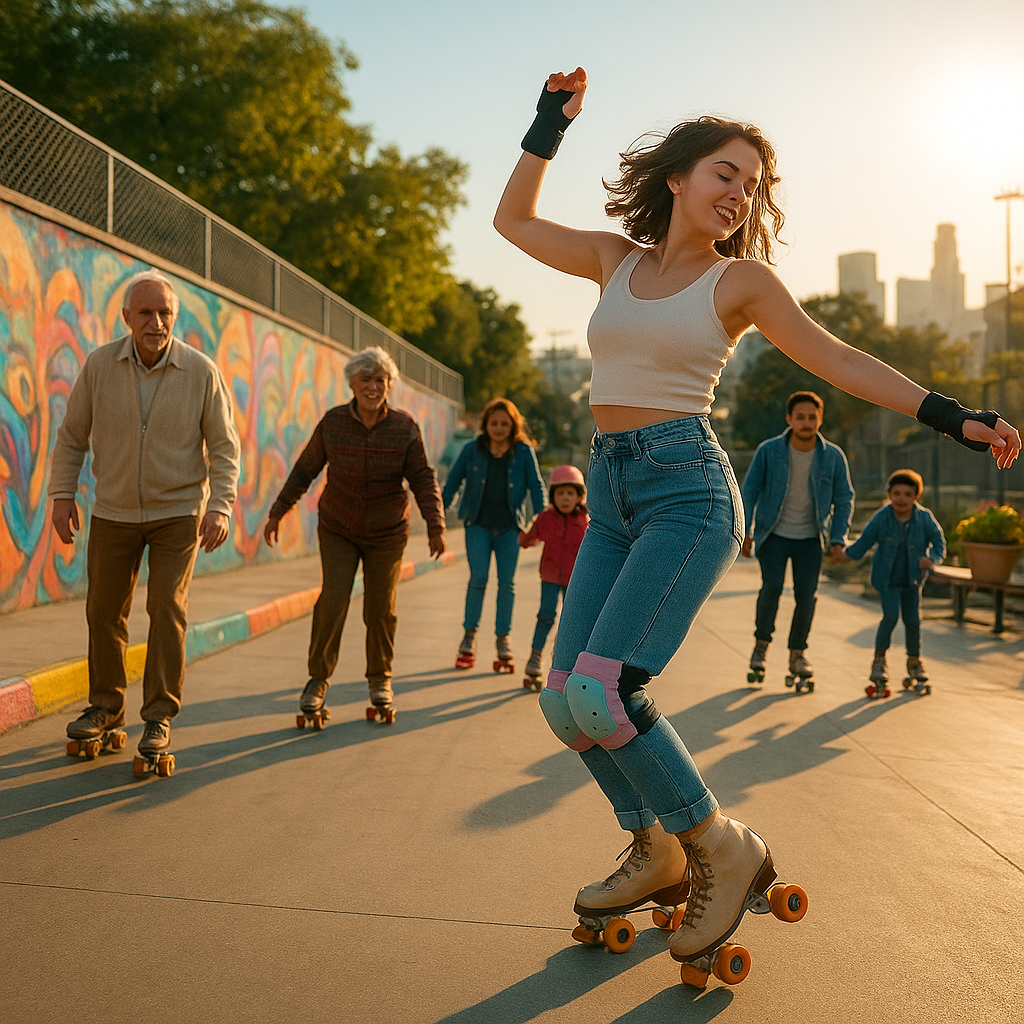
Beyond derby, general roller skating spaces have also often functioned as queer-friendly environments, particularly in urban areas. Many cities have regular “queer skate” nights at local rinks, continuing the tradition of skating as a space for communities that have historically been marginalized elsewhere.
Types of Roller Skating: A Subculture for Everyone
One of the reasons roller skating has proven so durable as a subculture is its remarkable diversity of styles and disciplines. There isn’t just one way to skate — there are many, each with its own community, aesthetic, and history.
- Rhythm/Jam Skating: The heart of Black rink culture, combining dance moves with skating in a deeply musical, improvisational style.
- Artistic Skating: A figure skating-influenced discipline emphasizing spins, jumps, and precise footwork, with its own competitive circuit.
- Speed Skating: Competitive racing on quad or inline skates, with a long Olympic and amateur tradition.
- Roller Derby: Full-contact team sport played on a flat or banked track, with a vibrant grassroots competitive scene.
- Outdoor/Park Skating: Freestyle skating in parks, plazas, and streets, blending influences from skateboarding and dance culture.
- Aggressive Inline: Trick-based skating using inline skates, closely related to skateboarding culture.
Each of these disciplines has its own stars, its own history, and its own devoted community — yet they all share the common language of wheels on a surface and a body in motion.
The Rink as Sacred Space
For many people who grew up skating, the rink wasn’t just a building — it was a sanctuary. This is especially true in Black communities, where rinks often served as some of the safest and most affirming spaces available. Generations of people had their first dates at rinks, learned independence, developed their sense of style, and built friendships that lasted lifetimes.
The fight to preserve historic Black rinks has become a cultural preservation issue in several cities. When long-standing rinks face closure, community members often organize to save them, recognizing that what would be lost isn’t simply a building but an irreplaceable piece of living cultural heritage. That same spirit of using rhythm and communal gathering as a form of resistance mirrors how funk music powered social movements beyond the rink walls as well.
Rolling Forward: The Subculture Today
Today’s roller skating subculture is wonderfully contradictory — simultaneously nostalgic and fresh, rooted in decades of tradition while attracting entirely new generations of skaters who found their way to quad wheels via social media. Older skaters who have kept the flame alive for decades now find themselves sharing rink space with enthusiastic newcomers, and the cultural exchange has been largely joyful.
Cities across the country have seen a renewed interest in outdoor skating meetups, organized by communities on social platforms. The soul and funk soundtrack that powered the classic rink era continues to draw people to the floor — there is something undeniably magnetic about the combination of that music and the physical freedom of skating.
Conclusion
Roller skating’s journey through American history is far more than a timeline of recreational trends. It’s a story about segregation and resistance, about Black creativity transforming limitation into liberation, about women claiming physical space, about LGBTQ communities finding belonging, and about the enduring human need for music, movement, and community.
From James Plimpton’s patent in 1863 to the viral TikTok skate videos of the 2020s, the wheel keeps turning. The subculture has survived disco’s death, economic downturns, and the digital revolution precisely because it offers something that no app can replicate: the feeling of rolling through space with other people, connected by rhythm and momentum. The rink, in all its forms, endures — and the culture it carries endures with it.