
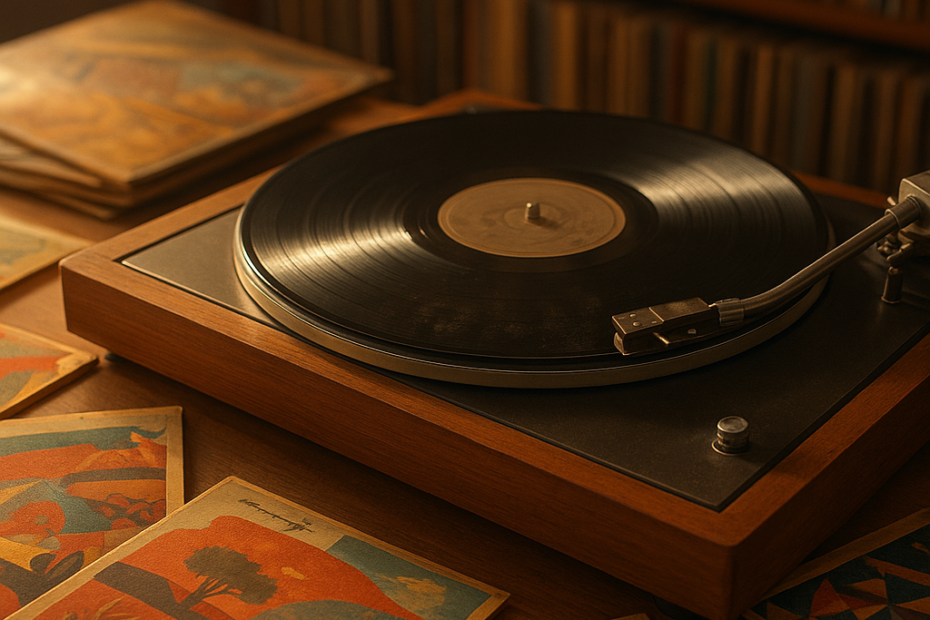
There’s something almost sacred about the moment a needle drops onto a vinyl record. That soft crackle before the music starts isn’t just an acoustic quirk — it’s a sound that connects listeners to a living archive of human experience. Vinyl records aren’t simply a medium for music; they are vessels of memory, community identity, and cultural history that no digital format has fully managed to replicate. From the blues recordings that documented the Great Migration to the ska pressings that carried Jamaican immigrant culture into British neighborhoods, records have long done the quiet, essential work of keeping communities tethered to who they are and where they came from.
As vinyl continues its remarkable resurgence — with global sales surpassing 43 million units in 2022, according to the Recording Industry Association of America — it’s worth exploring not just why people are buying records again, but why they’ve always mattered so deeply in the first place. The answer has less to do with audio fidelity than with something more human: the need to hold culture in your hands.
Vinyl as a Living Archive of Community Identity
Before music streaming, before MP3s, and even before cassette tapes, vinyl records were the primary technology through which communities documented their sonic identity. For many marginalized and working-class communities especially, records were one of the few accessible means of self-representation and cultural transmission.
Consider the role of independent “race record” labels in the 1920s and 1930s. Labels like Black Swan Records — the first Black-owned record company in the United States — existed not just to sell music but to preserve and distribute African American artistic expression during a time when mainstream media largely ignored or exploited it. These records captured blues, gospel, and jazz in ways that told the truth about Black American life. Today, those shellac and early vinyl pressings are irreplaceable historical documents.
Similarly, in the UK during the 1960s and 70s, Caribbean immigrant communities pressed and distributed records through informal networks of record shops, sound systems, and community centers. The reggae and rocksteady 7-inches that circulated through Brixton, Notting Hill, and Handsworth weren’t just entertainment — they were a form of cultural maintenance, a way for Jamaican, Trinidadian, and Barbadian communities to stay connected to their roots while building new lives abroad.
Why Vinyl Carries Cultural Weight That Streaming Can’t Match
There’s a genuine and often-asked question among music lovers and cultural historians alike: Why do vinyl records feel more culturally significant than digital music? The answer is multilayered.
The Physical Dimension of Memory
Vinyl records are objects. They take up space, they age, they carry fingerprints and scratches that tell their own stories. A record sleeve might have concert ticket stubs tucked inside it, or liner notes annotated in a grandparent’s handwriting. These physical artifacts become part of a community’s material culture in a way that a Spotify playlist never can.
Cognitive research consistently shows that physical objects trigger stronger autobiographical memories than abstract digital files. When an older Black American pulls out a Stax or Motown pressing from the 1960s, they’re not just playing music — they’re re-entering a world. The smell of the sleeve, the weight of the record, the image on the cover: all of it activates memory in ways that streaming simply doesn’t reach.
Liner Notes as Historical Documentation
One chronically underappreciated aspect of vinyl is the information found on record sleeves and liner notes. These documents contain the names of session musicians, recording engineers, producers, and arrangers — many of them from specific neighborhoods and communities. They include dedications, political statements, photographs, and poetry. On many soul and funk albums from the late 1960s through the 1970s, liner notes offered direct commentary on civil rights, Black pride, and community struggle.
Gil Scott-Heron’s album sleeves, for instance, weren’t simply packaging — they were manifestos. The same is true for records put out by community-based Latin music labels in New York, Tejano labels in Texas, or Native American artists who documented ceremony and language through independent pressings. These materials constitute a form of historical record that archivists and historians continue to mine for insight into lived community experience.
Record Shops as Community Hubs
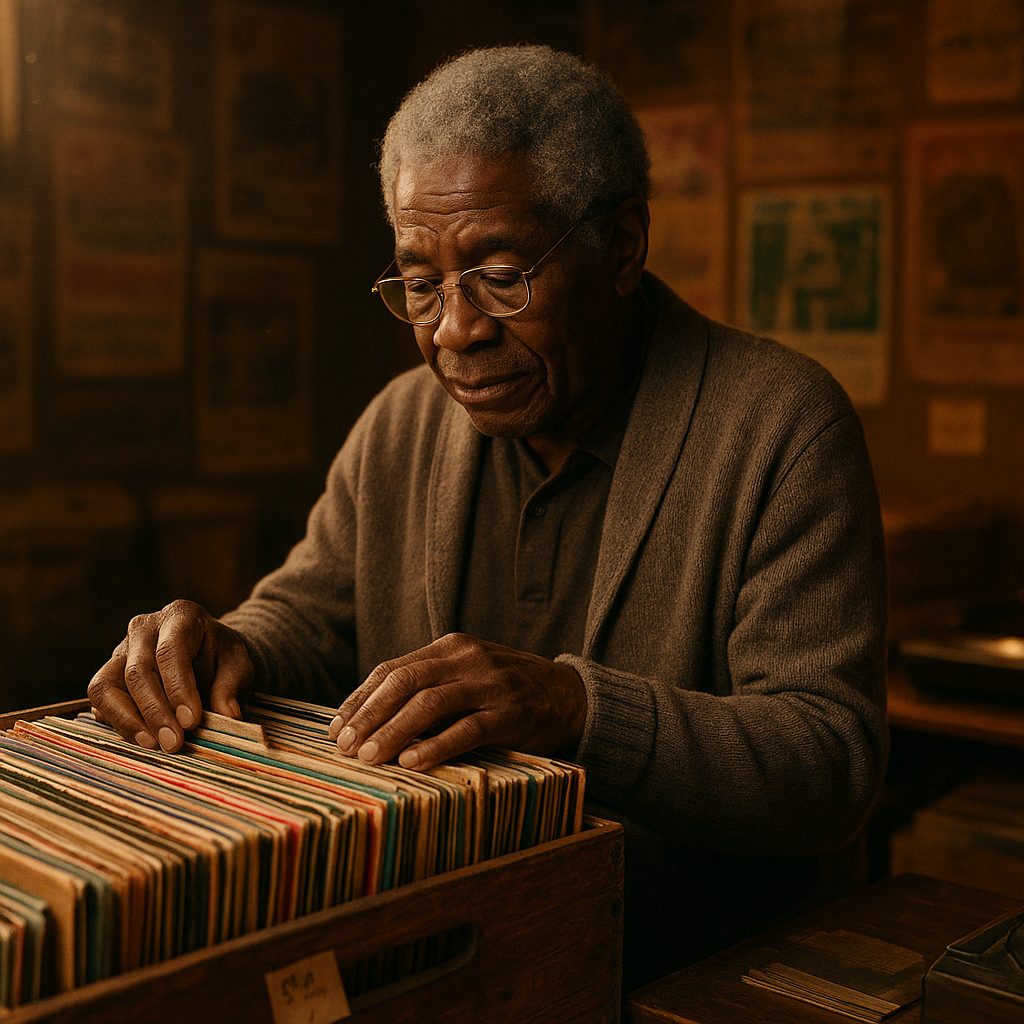
Ask anyone who grew up around a beloved independent record shop, and they’ll tell you the same thing: it was never just about the records. The shop was a meeting place, a forum, a classroom. It was where you found out about upcoming shows, discovered a new artist through a recommendation from someone behind the counter, or stood for an hour listening to a new import while debating its merits with strangers who quickly became regulars.
In cities like Detroit, Chicago, Philadelphia, and New Orleans, record stores in Black neighborhoods were cultural anchors. They stocked local pressings that major distributors wouldn’t touch, gave shelf space to artists from the community, and sometimes served as informal booking agencies for local musicians. The same was true in Latino communities across the American Southwest and East Coast, where Latin record shops were central to neighborhood social life.
The closure of many independent record stores in the 2000s, during the worst years of digital disruption, had a measurable impact on community cohesion. The 2019 documentary A Bunch of Amateurs and various cultural journalism pieces from that era documented how entire neighborhoods felt the cultural loss of their local record shops in ways that went far beyond music access. It stripped away a gathering point.
Today, the revival of independent record stores — bolstered in part by Record Store Day, which has grown into a global event since its founding in 2008 — signals something important. Communities are consciously choosing to preserve these spaces not just for nostalgia but for their ongoing social and cultural function.
How Community Organizations Are Using Vinyl to Preserve Local History
Across the United States and beyond, a growing number of organizations are recognizing vinyl records as legitimate historical artifacts worthy of preservation and scholarly attention.
Archives and Libraries Stepping Up
The Smithsonian Folkways collection, housed at the Smithsonian Institution, is perhaps the most well-known example of vinyl-based cultural preservation on a national scale. Its catalog of recordings spans folk traditions, indigenous music, labor songs, and diaspora communities that would otherwise be poorly documented. Many of these were originally released on vinyl, and the physical records themselves are maintained alongside digital transfers.
At the local level, public libraries and historical societies are increasingly collecting and cataloging regional vinyl releases. The New York Public Library’s Rodgers and Hammerstein Archives of Recorded Sound maintains thousands of recordings that document New York’s extraordinarily diverse musical communities. Similar initiatives exist in cities like New Orleans, where the Jazz Museum maintains vinyl archives that capture the evolution of jazz in its birthplace.
Community-Led Preservation Projects
Grassroots efforts are equally significant. Organizations like Dusty Groove America in Chicago have spent decades ensuring that rare soul, funk, and jazz pressings don’t disappear from circulation. Elsewhere, community groups in cities with large Caribbean, West African, and Latin American populations have started oral history projects that center around record collections — interviewing long-time residents about the records they own and the stories those records carry.
These projects recognize something fundamental: a vinyl collection is a biography. The records someone accumulated over a lifetime map their cultural journey — the music they danced to at their first party, the albums that got them through hard times, the local bands they watched grow from neighborhood talent to regional legends.
Vinyl and Cultural Transmission Across Generations
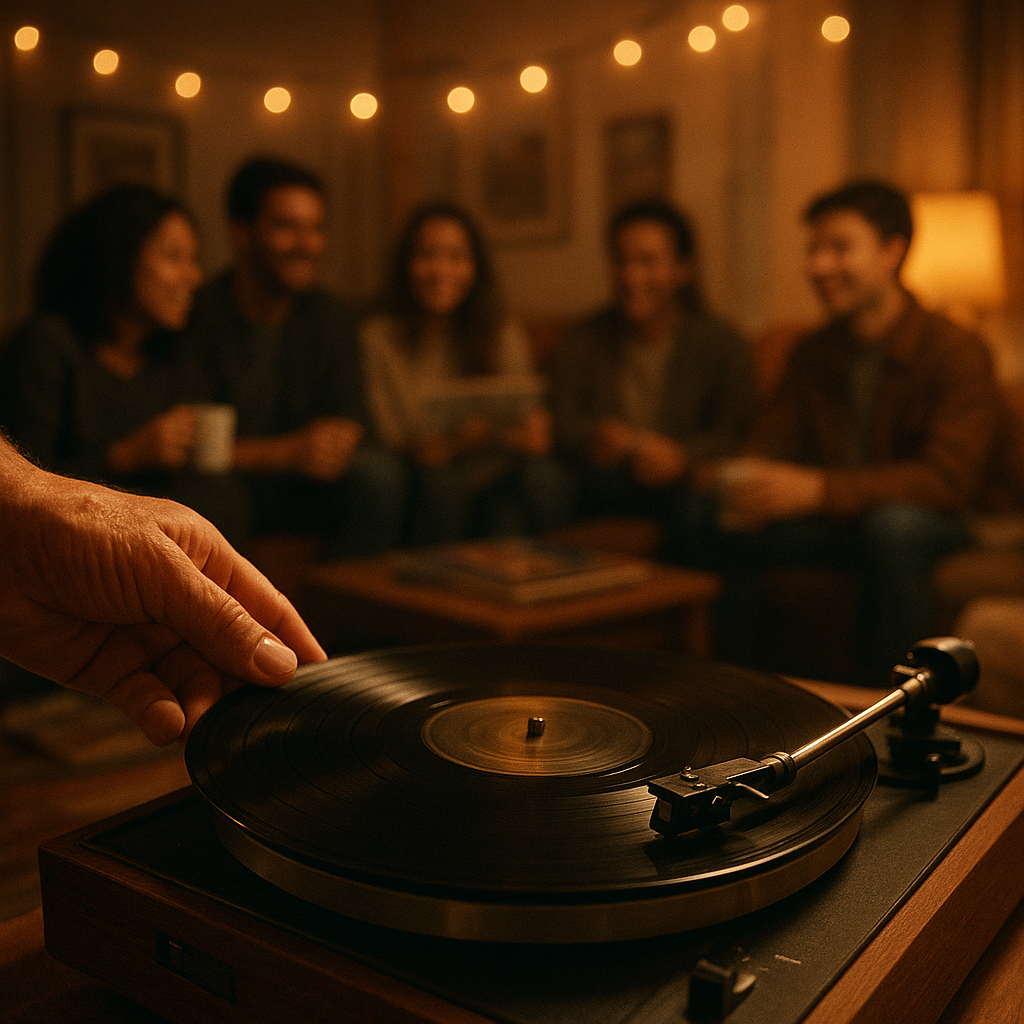
One of the most powerful roles vinyl records play is as a vehicle for intergenerational cultural transmission. Parents and grandparents pass down record collections the way other families pass down furniture or jewelry — with stories attached.
This is particularly significant in communities where oral tradition and cultural memory are central values. A grandmother’s collection of Aretha Franklin, Mavis Staples, and Al Green records isn’t just music — it’s a theological document, a statement about faith, femininity, and survival. A grandfather’s stack of cumbia and salsa 45s tells a story about immigration, adaptation, and pride. When these records are played for younger family members, the music becomes a bridge.
Research in music education has noted that children who are introduced to family record collections develop stronger cultural identities and a richer sense of community belonging than those whose musical exposure is primarily algorithmic. There’s something in the ritual of physically choosing a record, placing it on a turntable, and listening together that carries weight beyond the notes.
The Role of Funk and Soul in Community Storytelling
Few genres are as deeply tied to community identity and political consciousness as funk and soul. The records produced during the late 1960s and 1970s by artists working in these traditions were remarkable acts of community documentation. James Brown’s proclamations of Black pride, Marvin Gaye’s meditation on the state of the world in What’s Going On, and Curtis Mayfield’s unflinching look at urban poverty and resilience weren’t just popular music — they were communal texts.
Many of these records were pressed and distributed independently, often on labels owned by Black entrepreneurs operating within specific geographic communities. Labels like Stax in Memphis, Philadelphia International in Philly, and dozens of smaller regional imprints created a distributed national archive of Black American life that remains unparalleled in its depth and honesty.
Collectors and cultural historians return to these records repeatedly, not just for musical pleasure but for the worldview they encode. They remain some of the most vivid primary sources available for understanding Black American community life in the second half of the twentieth century. Much of this story is rooted in funk’s roots and broader cultural influence, which stretched far beyond the recording studio and into the everyday lives of communities across America.
Conclusion
Vinyl records have always been more than music delivery systems. They are artifacts of community life — objects that carry within them the sounds, politics, celebrations, and struggles of the people who made and loved them. From the independent race labels of the early twentieth century to today’s grassroots archiving projects, records have consistently served as one of the most intimate and enduring forms of cultural documentation available.
The ongoing vinyl revival is, in many ways, a cultural instinct at work. Communities are reaching back toward a medium that feels real, tangible, and honest — one that demands presence and attention rather than passive consumption. Whether it’s a family handing down a beloved collection, a local archive digitizing rare regional pressings, or a neighborhood record shop buzzing with conversation on a Saturday afternoon, vinyl continues to do what it has always done: hold community history in a groove and play it back for anyone willing to listen.